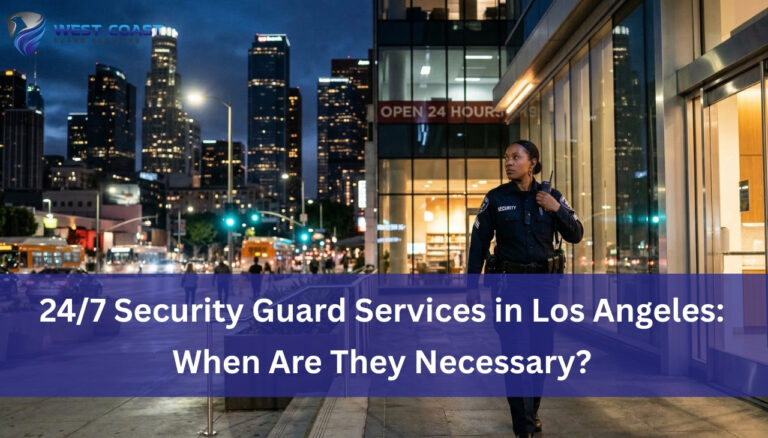
In the banking industry, safety and trust are key. Customers expect that their funds, data, and private information will be fully secured from exposure. This is where Bank Security Services is present. When a bank branch opens its doors, security staff will oversee security cameras, request verification, and strictly control access.
Their main purpose is to limit unauthorized access and address a security risk before it becomes a reality. Banks may utilize licensed security staff to enable systemic risk management and comprehensive prevention.
The Importance of Bank Security Services
Banking environments are exposed and are in constant risk of a 24/7 threat. The cash exchanges are very large and customer information may contain confidential material.
So these are prime targets for theft, fraud, or cybercrime.
Bank Security Services assures that surveillance is fully functional, and documented long records, from the ATM to the vault rooms. Therefore, there is one additional layer of prevention before noncompliance becomes a serious crime. Additionally, qualified and experienced security officers are trained to identify and manage threat assessments.
The Function of Security Guards within Banks
Security guards serve as the foundation of bank protection. They oversee access control systems, check identification, and watch visitors and employees. They also monitor any suspicious or mischievous behavior.
They also react to dangerous security incidents. Professional security guards assess threats while also performing security audits and providing the highest level of assurance to public safety. In cases of emergency, they react quickly to help protect the safety of human lives and property.
Access Control and Surveillance Systems
Modern-day banks emphasize physical security measures and advanced technology. The bank security guards work closely with biometric scanners, smart card access, and keypad entry systems. These systems work through integrated physical security management. They confirm that only authorized people have access to highly restricted areas, such as vaults and data facilities.
Real-time monitoring and surveillance cameras are additional tools that assist in incident management and reporting of suspicious movement. Another security role of the security guard, is to provide a level of safety through both human observation and the use of technology.
Avoiding unauthorized access as well as breaches in security
Unauthorized entry is one of the largest threats to banks. Unauthorized people should not be permitted entry. Identifying and verifying credentials ensure that only authorized individuals can enter secured areas. Continuous monitoring ensures that any suspicious behaviors will not remain unaddressed. Guards assist in creating access policies and practicing drills to respond to breaches.
Protecting data and sensitive information
Banks are not only protecting money, but also sensitive, electronic information as well. Professional bank security guards protect this data through the cyber and physical security systems.
The bank security guards establish risk reduction protocols that include deprivation of access and limited escalation of unauthorized data access. Access control helps employees access to data to which they are authorized. The guards mitigate the risk of data security breaches, relying on preserving customer confidence and trust.
Cooperate with Law Enforcement and Emergency Services
Cooperation with law enforcement and emergency services is critical in high-risk situations. Bank security guards receive continuous training to cooperate with law enforcement agencies, situational awareness, and response protocols. High-risk situations may involve a robbery attempt or a fire emergency.
They operate within established security protocols and adhere to their obligations under safety compliance procedures. Regarding their role in managing an active threat, bank security guards will ensure corps trustees can continue serving the bank and conduct business initiatives quickly.
Regulatory Compliance or Safety Standards
Banks are required to comply with safety regulations and compliance regulations. Professional security guards enforce compliance with regulatory requirements related to security access systems. Regular site inspections, policy enforcement, and security audits are mechanisms to identify underperforming protection strategies.
The Human Factor of Security
Although technology plays an important role, we cannot ignore the human factor. Security officers use their intuition, observation, and decision-making capabilities that machines will not develop. Their ability to determine situational awareness, along with their understanding of access control technologies, will allow them to respond to evolving threats in real-time. The presence of a competent, friendly, and alert security officer provides customers with comfort.
Gaining Trust from Security Visibility
Banks not only gain trust by securing money but also by demonstrating to their customers that a secure environment is being maintained. The visible security presence not only helps to alleviate some fear but also generates confidence among customers and staff. When clients see security through patrolling, monitoring, and surveillance, they recognize that the bank is taking security seriously.
Conclusion
In today’s climate, no bank should take security lightly. Professional Bank Security guards use technology and tactics to create a safer environment. Access control systems, surveillance monitoring, data protection, and first responders all serve to ensure safety.
The West Coast Guard provides the best security guard services in Los Angeles and stands out with unique bank security. Professional security guard services will further protect physical assets, employees, and clients. In short, investing in a reliable security service provider means investing in peace of mind and long-term enterprise value.